Home
Meet God At Home

Main navigation

  • Home
  • Bookmarks
  • Following Jesus
  • Fishing for People (Evangelism)
  • Vision Casting
  • Lessons Learnt
  • Tool Box
  • Gospel Tracts
  • Apologetics
  • Partnerships & Donations
  • Contact Us
User account menu
  • Log in

Breadcrumb

  1. Home

Zuko Explains – The Two Bethlehems & the Birth of Jesus

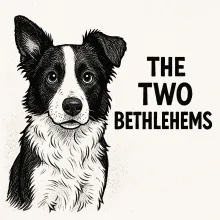
Zuko explains the two towns of Bethlehem

🐾 What is this about two towns called Bethlehem?

We will cover: Historical background, Language notes, Prophecy, Gospel accounts, Maps, & Speculation Cautions.
Quick Summary

Yes, there were two towns named “Bethlehem.” Scripture distinguishes Bethlehem Ephrathah (south in Judah) from another Bethlehem in Galilee region up north. The prophecy (Micah 5:2) points to which Bethlehem the Messiah will come from.

Key texts: Micah 5:2; Matthew 2:1–6; Luke 2:4–7; John 7:42.

Maps: Bethlehem of Judea vs. Bethlehem of Galilee (Zebulun)
Map of Israel Thumbnail
Map 1. Bethlehem of Judea (a.k.a. Bethlehem Ephrathah), just south of Jerusalem. (Click on Thumbnail to see Image.)
/User_resources/images/maps/bethlehem-of-galilee.webp
Map 2. Another town named Bethlehem in the north (Galilee/Zebulun) attested in historical-geographical sources. (Click on Thumbnail to see Image.)
/User_resources/images/Church_of_the_Nativity.webp
Photo. Traditional site area associated with Jesus’ birth in Bethlehem of Judea.
(Click on Thumbnail to see Image.)
Prophecy Focus: “Bethlehem Ephrathah” in Judah (Micah 5:2)

Micah 5:2 identifies the birth-place of the coming ruler as “Bethlehem Ephrathah … among the clans of Judah.” The double name removes ambiguity by tying Bethlehem to Judah (David’s tribe), not to a northern locale.

Text (ESV-style excerpt): “But you, O Bethlehem Ephrathah, who are too little to be among the clans of Judah, from you shall come forth for me one who is to be ruler in Israel…” (Mic 5:2)

  • Language note: Ephrath/Ephrathah is an older toponym tied to the area around Bethlehem in Judah (cf. Genesis 35:19; Ruth 4:11).
  • Davidic link: Bethlehem is “the city of David,” aligning the Messiah with David’s line (2 Samuel 7; Luke 1:32).
Gospel Accounts: “Bethlehem of Judea”
  • Matthew 2:1–6 — Jesus is born in Bethlehem of Judea. Herod consults the chief priests/scribes, who cite Micah 5:2 to pinpoint Bethlehem.
  • Luke 2:4–7 — Joseph goes to the city of David, called Bethlehem, because he is of David’s house and lineage; Jesus is born there.
  • John 7:42 — Crowd recalls Scripture: the Christ comes from David’s offspring and from Bethlehem, David’s village.


History & Background
  • Two Bethlehems: Ancient sources and toponyms attest a Bethlehem in Judah (south, near Jerusalem) and another in the north (often associated with Zebulun/Galilee).
  • Why the southern Bethlehem? Micah’s wording (Ephrathah … Judah) and the Gospels’ explicit “of Judea” anchor the birth in the Davidic town.
  • Cultural setting: Davidic expectations shaped messianic hopes; locating the birth at David’s town signals royal legitimacy.
  • Article on the History and culture of the nature of the gifts the Magi brought to give to Jesus. 
Language Notes: Ephrath/Ephrathah & David’s City
  • Ephrath/Ephrathah: Older geographical designation linked with Bethlehem in Judah (Genesis 35:19; 48:7).
  • “City of David”: Bethlehem as David’s hometown frames the Messiah’s birth within the Davidic covenant (2 Sam 7; Luke 2:11).
Speculation Review 1: Persian / Esther Connections

Claim: The Magi (wise men) were linked to Jewish communities remaining in Persia/Babylonia after the exile (sometimes framed via Esther and the Persian court), implying a Jewish identity for the visitors.

Why it appeals: The East (Persia/Babylonia) housed large Jewish populations; biblical books like Daniel and Esther show Jews in royal courts, and “Magi” is historically associated with Persian priestly/learned classes.

Assessment: The Gospels do not say this. Matthew 2 calls them “wise men from the East” but does not identify them as Jews or connect them to Esther. Any such identity claims are extra-biblical and remain unverified.

What we can say: A Persian/Babylonian cultural setting for “Magi” is plausible (lexically and historically), but a direct Esther/Jewish identity link is not attested in Scripture.

Speculation Review 2: Lost Northern Tribes

Claim: The wise men were descendants of the northern (ten) tribes exiled by Assyria who remained in the East and later came to worship the newborn King.

Why it appeals: It fits a reunification motif and explains Gentile-region knowledge of messianic hopes.

Assessment: No biblical text identifies the Magi as Israelite remnants. Matthew emphasizes their foreign origin (“from the East”) and uses their visit to foreshadow Gentile inclusion, not tribal return.

What we can say: While Jewish diaspora communities surely existed, tying the Magi specifically to the northern tribes is speculative and lacks verifiable sources.

Final Caution on Unverifiable Speculations

It’s valuable to distinguish what Scripture states from later theories. For teaching and discipleship, keep the anchor points clear:

  • Prophecy: Micah 5:2 — Bethlehem Ephrathah in Judah.
  • Fulfilment: Matthew 2:1–6; Luke 2:4–7; John 7:42 — Bethlehem of Judea.
  • Speculation: Persian/Esther and Lost-Tribes identities of the Magi are interesting to explore, but remain non‑authoritative without textual support.
Scripture References & SOS Questions
  • Micah 5:2
  • Matthew 2:1–6
  • Luke 2:4–7
  • John 7:42
  • Background mentions: Genesis 35:19; 48:7; Ruth 4:11; 1 Samuel 16–17; 2 Samuel 7; Luke 1:32.
  • Timeline Question:   How much time had elapsed when the Magi arrived to honour Jesus? What does Matthew 2:7, 16 tell you?
  • Magi Questions:  How many magi came to honour Jesus?  What does the Gospel accounts say about it?
  • Who exactly were the Magi and where did they come from?  What does the Gospel accounts say?

Return to Main Menu


Tags

  • bethlehem
  • magi
  • wise men
  • gold
  • frankincense
  • myrrh
  • olof explains
  • Olof
  • Olaf
  • disney
  • prophets
  • Zuko
  • border collie
  • bible
  • prophecy
  • Ester
  • babylon
  • assyria

Comments

SOS Next Level TOC

  1. Facilitator Notes - Mormonism (LDS)
  2. Zuko Explains - The Penitential Psalms
  3. An example Imagination game
  4. Archaeology and the Bible — Evidence the Text Sits in Real History
  5. Authorship and Eyewitness Testimony: Who Wrote the New Testament — and When?
  6. Baptism in Jesus’ Name Only — What Does the Bible Actually Teach?
  7. Books of the Bible Explained: Genres and Chronological Order
  8. Buddhism - 5 strengths, also their 5 weaknesses
  9. Buddhism 2 Can Desire Be Removed — Or Is It Pointing Somewhere?
  10. Buddhism Explained — A Guided Journey Through Belief, Meaning, and Hope
  11. Buddhism: Is Enlightenment Enough — Or Do We Long to Be Known?
  12. Buddhism: Compassion Without a Giver — Where Does Love Come From?
  13. Buddhism: If Suffering Ends, What Happens to Love?
  14. Buddhism: If There Is No Self — Who Is Being Freed
  15. Can Desire and Suffering Be Escaped — Or Are They Pointing Somewhere?
  16. Can the Bible Be Trusted? Historical, Archaeological & Manuscript Evidence
  17. Can These Hopes Be Combined — Or Must One Be Chosen?
  18. Christadelphians - what does the Bible say about the Holy Spirit?
  19. Discovering Your Gifts in the Holy Spirit
  20. Does Buddhism Offer Hope — Or Only Escape?
  21. Does the World Need Escape or Rescue? Buddhism, Suffering, and the Christian Answer
  22. Escape or Redemption? Two Very Different Hopes
  23. Exploring Christadelphian Beliefs — A Self-Discovery Bible Study (SOS)
  24. Facilitator Notes - William Branham
  25. Facilitator Notes – Shincheonji
  26. Facilitator Notes — Jehovah’s Witnesses
  27. Further External Resources on Bible Archaeology
  28. Hinduism Explained — A Guided Journey Through Belief, Meaning, and Hope
  29. How the Canon Was Recognised (Not Decided)
  30. Icebreaker: Category 1 - Predictable Imagination
  31. Icebreaker: Category 2 - Moral Intuition
  32. Icebreaker: Category 3 - Longing and Meaning
  33. Infant Baptism vs Believer’s Baptism: What Does the Bible Actually Say?
  34. Is Satan Personal? A Bible-Only SOS Study
  35. Is the Self an Illusion — Or Something Meant to Last?
  36. Leaders of the Bible Simple Timeline
  37. Phase 2 — When the Gospel Is Challenged
  38. Prophets Of the Bible - Simple timeline
  39. Sikhism and Sufi Islam
  40. Sikhism Part 1: Who are the Sikhs? (Punjab, the Gurus, the community)
  41. Sikhism Part 2: One God, Many Words — What Do Sikhs Mean by “Waheguru”?
  42. Sikhism Part 3: Sin, Karma, and the Problem of the Heart
  43. Sikhism Part 4: Salvation, Grace, and Assurance
  44. Sikhism Part 5: Sikh Scripture Explained - The Guru Granth Sahib
  45. Sikhism Part 6: Jesus in Sikh thought vs Jesus in the Bible
  46. SOS Squared – Study, Obey, Share (Hermeneutics Part 3)
  47. SOS – Next Level (How to read the bible for all its worth Part 2)
  48. Speaking in Tongues — What the Bible Actually Teaches (SOS Study)
  49. The Book of Enoch: Genre, Authority, and How It Should Be Read
  50. What did Jesus Have against the Pharisees
  51. What Does It Mean to “Pray in the Spirit”?
  52. What Happens at the End? Extinction, Enlightenment, or Resurrection
  53. What Is Buddhism? Core Beliefs, Practices, and Everyday Life Explained
  54. What Is Hinduism?
  55. Who Am I, Really? Self, Identity, and Why It Matters
  56. Why Different Bibles Have Different Tables of Contents
  57. Zuko Explains - "Christianese" (A–Z Glossary of Big Words)
  58. Zuko Explains - Agur & Lemuel
  59. Zuko Explains - Christian Conflict Resolution (Matt 18)
  60. Zuko Explains - Doxology & Imprecatory
  61. Zuko Explains - Ecclesiastes
  62. Zuko Explains - Esther
  63. Zuko Explains - Ezekiel
  64. Zuko Explains - Hebrew Acrostic Stanzas
  65. Zuko Explains - ḥesed (חֶסֶד) and agápē (ἀγάπη)
  66. Zuko Explains - Hezekiah’s Men
  67. Zuko Explains - Isaiah - Life & Times
  68. Zuko Explains - Israel's Good & Bad Kings
  69. Zuko Explains - Jeremiah - Life & Times
  70. Zuko Explains - Jewish Festivals
  71. Zuko Explains - Job
  72. Zuko Explains - Lamentations
  73. Zuko Explains - Leaders in the Bible
  74. Zuko Explains - Leadership Quick Reference Tables
  75. Zuko Explains - Names & Titles of God (A–Z)
  76. Zuko Explains - Parables
  77. Zuko Explains - Paul & His Companions
  78. Zuko Explains - Prophet Daniel
  79. Zuko Explains - Prophets' Timeline
  80. Zuko Explains - Restoration of Lost Tribes Chart
  81. Zuko Explains - Song of Songs
  82. Zuko Explains - The Book of Acts
  83. Zuko Explains - The Old Testament Prophets (Big Picture)
  84. Zuko Explains - The Pharisees at a glance
  85. Zuko Explains - The Sabbath
  86. Zuko Explains - The Sadducees at a glance
  87. Zuko Explains - The Samaritan Letter
  88. Zuko Explains - The Samaritans at a Glance
  89. Zuko Explains - The Zealots at a glance
  90. Zuko Explains - What is Scripture?
  91. Zuko Explains - Word of Faith (WoF)
  92. Zuko Explains -The Psalms
  93. Zuko Explains -The Sons of Korah
  94. Zuko Explains Buddhism 1
  95. Zuko Explains Hermeneutics
  96. Zuko Explains New Testament Fasting
  97. Zuko Explains Sikhism - Launch Page
  98. Zuko Explains the Bible - SOS “Next Level” Resources
  99. Zuko Explains the Hindu Caste System
  100. Zuko Explains Wisdom Parallelism

Pagination

  • Page 1
  • Page 2
  • Next page
  • Last page

Footer

  • Contact
  • Privacy & Information