5 Top Tips for reading the Bible for all its worth:
1. PRAY! Pray that the Holy Spirit will teach you and give you understanding
2. Source different versions of the Bible
3. Study large blocks of text instead of individual verses
4. Ignore headings (IE: chapters, subheadings and verses) and try not to start with joining words (EG: but, therefore, likewise, etc.). Instead, determine where the topic begins and start from there.
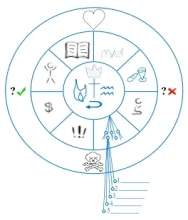
5. Use a tool like S. O. S. (details below)
This article builds on the basic S.O.S. Bible study approach introduced in Part 1 and introduces a deeper method for interpreting Scripture by considering it through multiple contextual “levels” of meaning. It explains the hermeneutical concept of Sitz im Leben (“settings in life”) — reading the Bible not only from our own perspective but also from the perspectives of the original speakers and the human authors of the biblical text. The page outlines three study levels:
Original Setting – What did the text mean to the original people involved?
Author’s Setting – Why did the human author include this text, and how does its placement shape meaning?
Present Application – How does the passage speak into modern life today?
Using the story of Jesus and the Samaritan woman (John 4:1–42) as an example, it walks through each level with questions to guide study, focusing on Say, Obey, and Share at each stage. The goal is to help readers move beyond surface reading, appreciate literary genre, deepen insight into familiar passages, and develop a richer, Spirit-led understanding of Scripture.
This page serves as the hub for the Zuko Explains the Bible series, a growing library of clear, accessible articles designed to support deeper Bible study using the Self-Discovery Bible Study (SOS) methodology. It explains that these resources are written in simple everyday English — inspired by the lighthearted “Olaf Explains…” style — and aim to unpack historical context, cultural background, original language nuances, and practical discipleship tools. The introductory section clarifies that the resources are not standalone Bible studies, but supplemental guides to help readers go deeper once they have mastered basic SOS principles.
The page then lists linked articles in thematic groupings, including foundations of hermeneutics and SOS, explanations of Scripture and Bible genre, New and Old Testament books and figures, glossaries of key terms, deep-dive studies, and comparative explorations of religions and sects — all written in the same explanatory style. The goal is to give context and insight to support careful, grounded reading of Scripture rather than replace the biblical text itself.
A practical guide for first-time AIM leaders explaining both how to lead an AIM session and why the process is structured the way it is. Learn the AIM pattern of Come & See, Report & Celebrate, Hear & Obey, Practise & Plan, and Go & Tell. Discover the role of MAWL (Model, Assist, Watch, Launch), the importance of balancing accountability, intimacy with God, and multiplication, how to use People Lists (Oikos), and why the red asterisk (*) questions contain the core disciple-making DNA that should always be preserved when time is limited.
The Making Disciple Makers Diagnostic is a practical Acts 2:36–47 tool for personal discipleship, small groups, leadership development, and whole congregations. It helps identify strengths, weaknesses, balance, and next steps for growing as disciple makers.
This page has been put up to help leaders remember what they have been shown during their 3/3 sessions about Baptism.
Baptism is one of only two ceremonies that Jesus commanded us to keep. (The other being the Lord's Supper). There is no prescribed ritual for performing a baptism.
In scripture, the word “Baptise” comes from the original Greek word: βαπτίζω, baptizō, (Verb: pres act part masc plur nom) and means to fully immerse.
As something grows good governance, sharing information and best practices are essential to keep any endeavour moving forward there is no doubt to that. However I believe there can be a danger hidden in success! Lets look at one trap I believe that we can easily avoid.
Second on this series of Crash and Burns is the hidden world between the teacher and their students that can be more than it first appears to be. I have escaped this trap myself mostly but I have seen many of my disciples fall into it because I failed to bring the problem up into the foreground. It is only later when they come to me and ask why they can’t get their groups to multiply down in the generations I realise my failure. This would be, in my opinion, the second biggest cause for a network failing to multiply down the generations!
This is another article showing you my underbelly for the good of the Kingdom, I will attempt to guide you around some deep potholes of my early walk. Once again, we in the West are too invested in our own viewpoints and find it hard to believe that other cultures or people groups can have a completely different view. This article will cover such topics like "African Time", "honesty" verses "face" and the "Client/Patron relationship" Buckle up (and try not to laugh).
Hate fighting with kids to go to bed every night? Find smaller kids a hassle when doing a church or bible study session at home?
Have you got small children and want to include them into an AIM church or session? Hakuna matata (hakuna wasiwasi) - No problem – No worries, and you can have fun too!
1. They don’t really see the need to change. The change is imposed on them based on the expectations, or perceived expectations, of others (externally).
2. Lack of CLEAR, SPECIFIC and MEASURABLE goals.
3. Little or no SUPPORT (training, backup) and ACCOUNTABILITY in reaching those goals.
Important Note: This article was designed to fit in the last third of the three thirds meeting. Usually called “Multiplication” or “Look Ahead”. These exercises can be completed after the group has first done a self-discovery Bible study on the passage. It is not to be used as a teaching medium but instead as a memory reinforcement for what they have already discovered for themselves.
The Five "P"s in the template of how Jesus wanted us to pray.
Does a piano know its own full potential? Can it write and play a master piece by itself?? Does a piano know fully what the other instruments around it are capable of? Does a piano know how to work best with the other instruments around it? I don’t think so. So why do we think that we know what is best for ourselves and others? Why do we set limits on what we can and cannot do?
Only a master artist can use a piano to its full potential; only God knows what your true potential is and can use all of you! Don’t set yourself up for a fall; let Him take total control of your life.
People frequently assert that the Bible has undergone corruption over time. Copied and re-copied. How can we be sure it says what it is supposed to say? Well, check this out!
Have a look at this picture. Can you read this sentence? ... Give it a try; after all, it is only simple English.
Ok maybe that image was too small and a bit blurred, I apologise. Try this one instead it is much easier. (Come back here after you have had a look at it.)
Don’t feel too bad if you can’t get it all. This is old English, and there have been four very major changes to our language since it was last used in 1066 AD.
As followers of Christ, how much do we focus on his direct teachings? How much do we actually apply them to our everyday lives? Here is a list of some common simple commands that we can start to apply:
For (approximately) the first twenty-four years, I had heard 1248 sermons, attended 1248 home Bible studies, and sung (badly) about 3744 hymns, but how many people had I introduced to the Lord?
How much over those 24 years had I thought just about my needs and not about anyone else’s salvation and growth, let alone being a part of growing the Kingdom here on Earth?
Of all those years of knowledge and studies, how much of it did I actually obey and put into daily practice? Not much at all, really, when I think honestly about it!
This is a little exercise that my friend Dave K. added to our Blind Spot Test ice breaker. (Like the Blind Spot test it can be used for ice breaking evangelism or discipleship.)
Someone put a black dot in the middle of a white A4 piece of paper and held it up. Dave was then asked to tell them what he saw. He replied “a dot?”.
In this practical world, what does it really mean to make Jesus your Lord today? It is always a good idea to get a potential new Christian to count the cost before they commit to a lifetime commitment to Jesus Christ. It is especially good to explain to someone with a "high church" history what it means to have a personal relationship with Jesus. (e.g., Catholic, Orthodox, Anglican, etc.)
Remember to let them decide what their main life activities are and how big a slice of pie to give to each one!
MAWL is a training (discipleship) tool that is at the very core of Disciple Making Movements (DMM) and Church Planting Movements (CPM). The traditional tool stood for "Model, Assist, Watch and Leave". The article explains the reason why we changed it to "Model, Assist, Watch and Launch".
Which focus is better (church planting or disciple making)?
As someone who participated in church plants many years ago, I am shocked to see how many of these endeavours have survived and, nevertheless thrived! Why is that? The team I was a part of, as a very junior member, was very experienced. We did nothing without God.
The answer came to us years later and recently I saw a very good analogy in nature.
As a hobby beekeeper, I have seen two types of bee hives. Natural Hives and Man-made hives.
Once someone has admitted their wrongs and wants to turn their life around with Jesus as their Lord and Saviour it is time to discuss their baptism. Once you have discussed the process and you are sure that they both understand it and agree to participate in the process it is time to practice it.
Stan, a good friend, and I were walking in the garden the other day. He asked “Is that an apple tree?” and pointed to a tree that was about 600 mm (2 ft) tall. It was jam-packed with fruit (over twenty). I told him that it was a fairly young apple tree. He was amazed at the amount of fruit on it and asked me how it had so many apples. Was it a special type of apple tree?
If you can’t read that is not a problem. Neither could I when I first started out. (Most of the people that the bible was originally written for in the first place couldn't either.)
For the moment check out these audio MP3 versions of the Bible. :-)
We encourage people to find and grow their relationship with God through prayer and studying the Bible. No one is the fountain of all knowledge. With the help of the Holy Spirit, the Bible, a few friends and an easy tool you can grow along your journey with God as well as help others at the same time. If you want to know how please go to this article it will show you how easy it is.
Acts 9:31 So the church throughout all Judea and Galilee and Samaria had peace and was being built up. And walking in the fear of the Lord and the comfort of the Holy Spirit, it multiplied. (ESV)