following

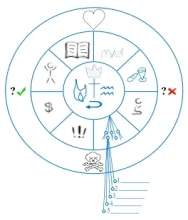
5 Top Tips for reading the Bible for all its worth: 1. PRAY! Pray that the Holy Spirit will teach you and give you understanding 2. Source different versions of the Bible 3. Study large blocks of text instead of individual verses 4. Ignore headings (IE: chapters, subheadings and verses) and try not to start with joining words (EG: but, therefore, likewise, etc.).  Instead, determine where the topic begins and start from there. 5. Use a tool like S. O. S. (details below)
This article builds on the basic S.O.S. Bible study approach introduced in Part 1 and introduces a deeper method for interpreting Scripture by considering it through multiple contextual “levels” of meaning. It explains the hermeneutical concept of Sitz im Leben (“settings in life”) — reading the Bible not only from our own perspective but also from the perspectives of the original speakers and the human authors of the biblical text. The page outlines three study levels: Original Setting – What did the text mean to the original people involved? Author’s Setting – Why did the human author include this text, and how does its placement shape meaning? Present Application – How does the passage speak into modern life today? Using the story of Jesus and the Samaritan woman (John 4:1–42) as an example, it walks through each level with questions to guide study, focusing on Say, Obey, and Share at each stage. The goal is to help readers move beyond surface reading, appreciate literary genre, deepen insight into familiar passages, and develop a richer, Spirit-led understanding of Scripture.
This page serves as the hub for the Zuko Explains the Bible series, a growing library of clear, accessible articles designed to support deeper Bible study using the Self-Discovery Bible Study (SOS) methodology. It explains that these resources are written in simple everyday English — inspired by the lighthearted “Olaf Explains…” style — and aim to unpack historical context, cultural background, original language nuances, and practical discipleship tools. The introductory section clarifies that the resources are not standalone Bible studies, but supplemental guides to help readers go deeper once they have mastered basic SOS principles. The page then lists linked articles in thematic groupings, including foundations of hermeneutics and SOS, explanations of Scripture and Bible genre, New and Old Testament books and figures, glossaries of key terms, deep-dive studies, and comparative explorations of religions and sects — all written in the same explanatory style. The goal is to give context and insight to support careful, grounded reading of Scripture rather than replace the biblical text itself.

This page has been put up to help leaders remember what they have been shown during their 3/3 sessions about Baptism.

Baptism is one of only two ceremonies that Jesus commanded us to keep. (The other being the Lord's Supper).  There is no prescribed ritual for performing a baptism.

In scripture, the word “Baptise” comes from the original Greek word: βαπτίζω, baptizō, (Verb: pres act part masc plur nom) and means to fully immerse.  

Second on this series of Crash and Burns is the hidden world between the teacher and their students that can be more than it first appears to be. I have escaped this trap myself mostly but I have seen many of my disciples fall into it because I failed to bring the problem up into the foreground. It is only later when they come to me and ask why they can’t get their groups to multiply down in the generations I realise my failure. This would be, in my opinion, the second biggest cause for a network failing to multiply down the generations!

This is another article showing you my underbelly for the good of the Kingdom, I will attempt to guide you around some deep potholes of my early walk. Once again, we in the West are too invested in our own viewpoints and find it hard to believe that other cultures or people groups can have a completely different view. This article will cover such topics like "African Time", "honesty" verses "face" and the "Client/Patron relationship" Buckle up (and try not to laugh).

“Milo Church” with the Whole Family

Hate fighting with kids to go to bed every night?  Find smaller kids a hassle when doing a church or bible study session at home?

Have you got small children and want to include them into an AIM church or session? Hakuna matata (hakuna wasiwasi) -  No problem – No worries,  and you can have fun too!